STASIS
A pipeline delivery generator
Loading...
Searching...
No Matches
environment.h File Reference
#include <stdio.h>
#include <stdlib.h>
#include <dirent.h>
#include "environment.h"
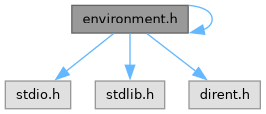
Include dependency graph for environment.h:

Go to the source code of this file.

Typedefs

typedef struct StrList RuntimeEnv
 

Functions

ssize_t runtime_contains (RuntimeEnv *env, const char *key)
 
RuntimeEnvruntime_copy (char **env)
 
int runtime_replace (RuntimeEnv **dest, char **src)
 
char * runtime_get (RuntimeEnv *env, const char *key)
 
void runtime_set (RuntimeEnv *env, const char *_key, char *_value)
 
char * runtime_expand_var (RuntimeEnv *env, char *input)
 
void runtime_export (RuntimeEnv *env, char **keys)
 
void runtime_apply (RuntimeEnv *env)
 
void runtime_free (RuntimeEnv *env)
 

Function Documentation

◆ runtime_apply()

void runtime_apply ( RuntimeEnv * env)

Update the global environ array with data from RuntimeEnv

Parameters
envRuntimeEnv structure
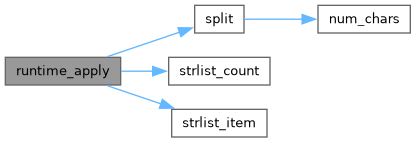
Here is the call graph for this function:

◆ runtime_contains()

ssize_t runtime_contains ( RuntimeEnv * env,
const char * key )

Determine whether a key exists in the runtime environment

Example:

int main(int argc, char *argv[], char *arge[]) {
RuntimeEnv *rt = runtime_copy(arge);
if (runtime_contains(rt, "PATH") {
// $PATH is present
}
else {
// $PATH is NOT present
}
return 0;
}
RuntimeEnv * runtime_copy(char **env)
Definition environment.c:144
ssize_t runtime_contains(RuntimeEnv *env, const char *key)
Definition environment.c:203
void runtime_free(RuntimeEnv *env)
Definition environment.c:462
Parameters
envRuntimeEnv structure
keyEnvironment variable string
Returns
-1=no, positive_value=yes
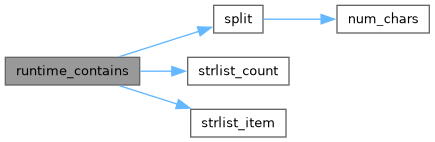
Here is the call graph for this function:

◆ runtime_copy()

RuntimeEnv * runtime_copy ( char ** env)

Populate a RuntimeEnv structure

Example:

int main(int argc, char *argv[], char *arge[]) {
RuntimeEnv *rt = NULL;
// Example 1: Copy the shell environment
rt = runtime_copy(arge);
// Example 2: Create your own environment
rt = runtime_copy((char *[]) {"SHELL=/bin/bash", "PATH=/opt/secure:/bin:/usr/bin"})
return 0;
}
Parameters
envArray of strings in var=value format
Returns
RuntimeEnv structure
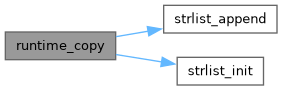
Here is the call graph for this function:

◆ runtime_expand_var()

char * runtime_expand_var ( RuntimeEnv * env,
char * input )

Parse an input string and expand any environment variable(s) found

Example:

int main(int argc, char *argv[], char *arge[]) {
RuntimeEnv *rt = runtime_copy(arge);
char *secure_path = runtime_expand_var(rt, "/opt/secure:$PATH:/aux/bin");
if (secure_path == NULL) {
// handle error
}
// secure_path = "/opt/secure:/your/original/path/here:/aux/bin";
return 0;
}
char * runtime_expand_var(RuntimeEnv *env, char *input)
Definition environment.c:283
Parameters
envRuntimeEnv structure
inputString to parse
Returns
success=expanded string, failure=NULL
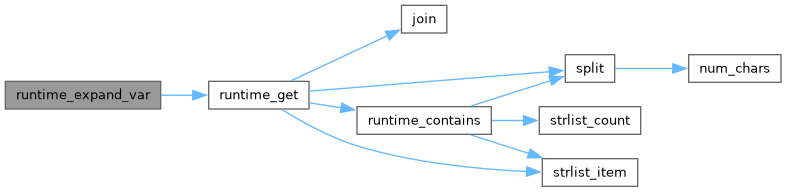
Here is the call graph for this function:

◆ runtime_export()

void runtime_export ( RuntimeEnv * env,
char ** keys )

Print a shell-specific listing of environment variables to stdout

Example:

int main(int argc, char *argv[], char *arge[]) {
RuntimeEnv *rt = runtime_copy(arge);
runtime_export(rt, NULL);
return 0;
}
void runtime_export(RuntimeEnv *env, char **keys)
Definition environment.c:60

Usage:

$ gcc program.c
$ ./a.out
PATH="/thing/stuff/bin:/example/please/bin"
SHELL="/your/shell"
CC="/your/compiler"
...=...
# You can also use this to modify the shell environment
# (use `runtime_set` to manipulate the output)
$ source $(./a.out)

Example of exporting specific keys from the environment:

int main(int argc, char *argv[], char *arge[]) {
RuntimeEnv *rt = runtime_copy(arge);
// inline declaration
runtime_export(rt, (char *[]) {"PATH", "LS_COLORS", NULL});
// standard declaration
char *keys_to_export[] = {
"PATH", "LS_COLORS", NULL
}
runtime_export(rt, keys_to_export);
return 0;
}
Parameters
envRuntimeEnv structure
keysArray of keys to export. A value of NULL exports all environment keys
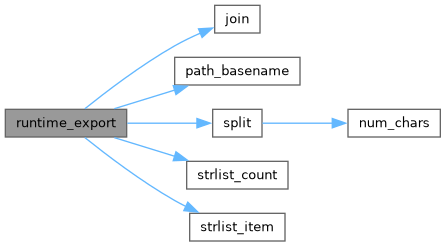
Here is the call graph for this function:

◆ runtime_free()

void runtime_free ( RuntimeEnv * env)

Free RuntimeEnv allocated by runtime_copy

Parameters
envRuntimeEnv structure
Here is the call graph for this function:

◆ runtime_get()

char * runtime_get ( RuntimeEnv * env,
const char * key )

Retrieve the value of a runtime environment variable

Example:

int main(int argc, char *argv[], char *arge[]) {
RuntimeEnv *rt = runtime_copy(arge);
char *path = runtime_get("PATH");
if (path == NULL) {
// handle error
}
return 0;
}
char * runtime_get(RuntimeEnv *env, const char *key)
Definition environment.c:242
Parameters
envRuntimeEnv structure
keyEnvironment variable string
Returns
success=string, failure=NULL
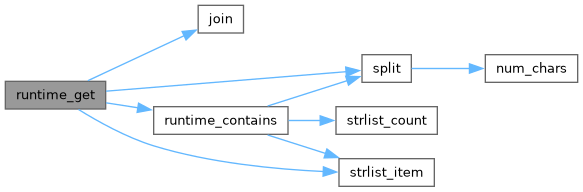
Here is the call graph for this function:

◆ runtime_replace()

int runtime_replace ( RuntimeEnv ** dest,
char ** src )

Replace the contents of dest with src

Parameters
destpointer of type RuntimeEnv
srcpointer to environment array
Returns
0 on success, <0 on error
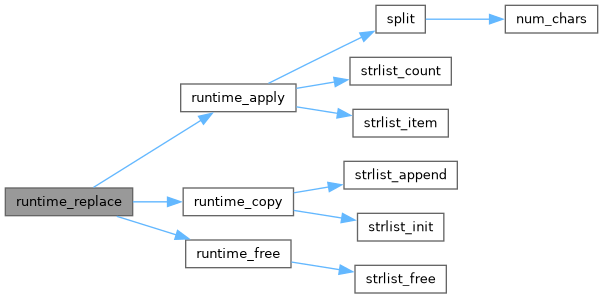
Here is the call graph for this function:

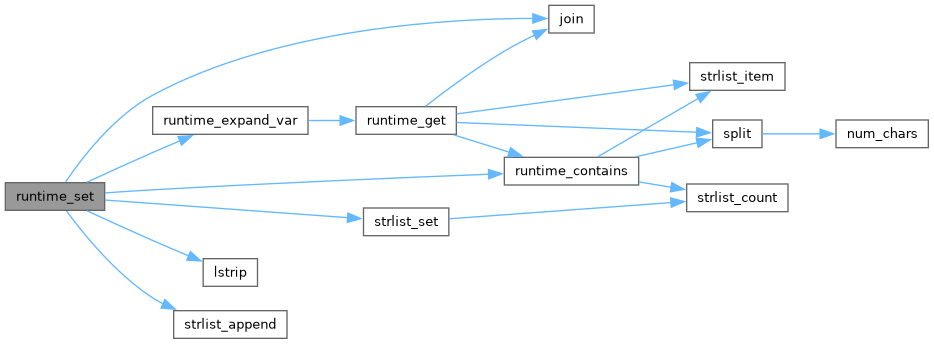
◆ runtime_set()

void runtime_set ( RuntimeEnv * env,
const char * _key,
char * _value )

Set a runtime environment variable.

Note: _value is passed through runtime_expand_var to provide shell expansion

Example:

int main(int argc, char *argv[], char *arge[]) {
RuntimeEnv *rt = runtime_copy(arge);
runtime_set(rt, "new_var", "1");
char *new_var = runtime_get("new_var");
// new_var = 1;
char *path = runtime_get("PATH");
// path = /your/path:/here
runtime_set(rt, "PATH", "/opt/secure:$PATH");
char *secure_path = runtime_get("PATH");
// secure_path = /opt/secure:/your/path:/here
// NOTE: path and secure_path are COPIES, unlike `getenv()` and `setenv()` that reuse their pointers in `environ`
return 0;
}
void runtime_set(RuntimeEnv *env, const char *_key, char *_value)
Definition environment.c:408
Parameters
envRuntimeEnv structure
_keyEnvironment variable to set
_valueNew environment variable value
Here is the call graph for this function: