 |
STASIS
A pipeline delivery generator
|
Loading...
Searching...
No Matches
|
STASIS
A pipeline delivery generator
|
#include <stdio.h>#include <stdlib.h>#include <string.h>#include <stdarg.h>#include <ctype.h>#include "core.h"#include "log.h"#include "relocation.h"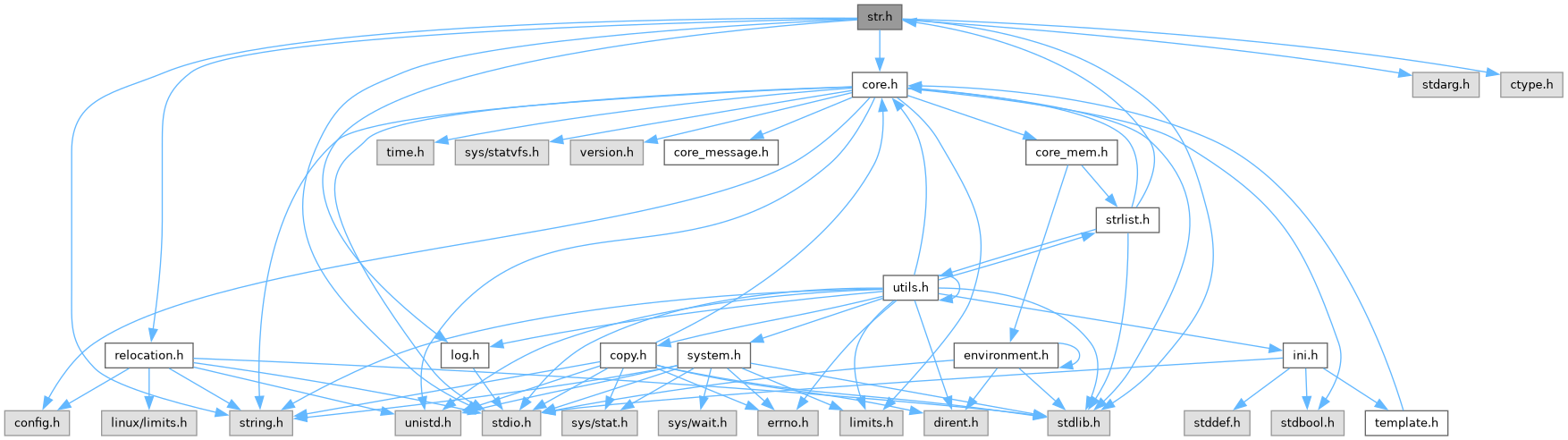
Go to the source code of this file.
Macros | |
| #define | STASIS_SORT_ALPHA 1 << 0 |
| #define | STASIS_SORT_NUMERIC 1 << 1 |
| #define | STASIS_SORT_LEN_ASCENDING 1 << 2 |
| #define | STASIS_SORT_LEN_DESCENDING 1 << 3 |
| #define | strdup_maybe(S) |
Functions | |
| char * | strdup_maybe_entry (const char *restrict s, struct ExecPoint ep, int exit_code) |
| int | num_chars (const char *sptr, int ch) |
| int | startswith (const char *sptr, const char *pattern) |
| int | endswith (const char *sptr, const char *pattern) |
| void | strchrdel (char *sptr, const char *chars) |
| char ** | split (char *sptr, const char *delim, size_t max) |
| char * | join (char **arr, const char *separator) |
| char * | join_ex (char *separator,...) |
| char * | substring_between (char *sptr, const char *delims) |
| void | strsort (char **arr, unsigned int sort_mode) |
| int | isrelational (char ch) |
| void | print_banner (const char *s, int len) |
| char * | strstr_array (char **arr, const char *str) |
| char ** | strdeldup (char **arr) |
| char * | lstrip (char *sptr) |
| char * | strip (char *sptr) |
| int | isempty (char *sptr) |
| int | isquoted (char *sptr) |
| char * | normalize_space (char *s) |
| char ** | strdup_array (char **array) |
| int | strcmp_array (const char **a, const char **b) |
| int | isdigit_s (const char *s) |
| char * | tolower_s (char *s) |
| char * | to_short_version (const char *s) |
| void | unindent (char *s) |
| int | safe_strncpy (char *dst, const char *src, size_t dsize) |
| int | safe_strncat (char *dst, const char *src, size_t dsize) |
| #define strdup_maybe | ( | S | ) |
| int endswith | ( | const char * | sptr, |
| const char * | pattern ) |
Scan for pattern string at the end of sptr
| sptr | string to scan |
| pattern | string to search for |
| int isdigit_s | ( | const char * | s | ) |
Determine whether a string is comprised of digits
| s |
| int isempty | ( | char * | sptr | ) |
Check if a given string is "visibly" empty
| sptr | pointer to string |
| int isquoted | ( | char * | sptr | ) |
Determine if a string is encapsulated by quotes
| sptr | pointer to string |
| int isrelational | ( | char | ch | ) |
Determine whether the input character is a relational operator Note: ~ is non-standard
| ch |
| char * join | ( | char ** | arr, |
| const char * | separator ) |
Create new a string from an array of strings
| arr | |
| separator | characters to insert between elements in string |
| char * join_ex | ( | char * | separator, |
| ... ) |
Join two or more strings by a separator string
| separator | |
| ... |
| char * lstrip | ( | char * | sptr | ) |
| char * normalize_space | ( | char * | s | ) |
Collapse whitespace in s. The string is modified in place.
| s |
| int num_chars | ( | const char * | sptr, |
| int | ch ) |
Determine how many times the character ch appears in sptr string
| sptr | string to scan |
| ch | character to find |
| void print_banner | ( | const char * | s, |
| int | len ) |
Print characters in s, len times
| s | |
| len |
| char ** split | ( | char * | sptr, |
| const char * | delim, | ||
| size_t | max ) |
Split a string by every delimiter in delim string.
Callee should free memory using GENERIC_ARRAY_FREE()
| sptr | string to split |
| delim | characters to split on |

| int startswith | ( | const char * | sptr, |
| const char * | pattern ) |
Scan for pattern string at the beginning of sptr
| sptr | string to scan |
| pattern | string to search for |
| void strchrdel | ( | char * | sptr, |
| const char * | chars ) |
Deletes any characters matching chars from sptr string
| sptr | string to be modified in-place |
| chars | a string containing characters (e.g. " \n" would delete whitespace and line feeds) |

| int strcmp_array | ( | const char ** | a, |
| const char ** | b ) |
Compare an array of strings
| a | pointer to array |
| b | poitner to array |
| char ** strdeldup | ( | char ** | arr | ) |
Remove duplicate strings from an array of strings
| arr |

| char ** strdup_array | ( | char ** | array | ) |
Duplicate an array of strings
| array |
| char * strip | ( | char * | sptr | ) |
| void strsort | ( | char ** | arr, |
| unsigned int | sort_mode ) |
Sort an array of strings
| arr | a NULL terminated array of strings |
| sort_mode |
|
| char * strstr_array | ( | char ** | arr, |
| const char * | str ) |
Search for string in an array of strings
| arr | array of strings |
| str | string to search for |
| char * substring_between | ( | char * | sptr, |
| const char * | delims ) |
Extract the string encapsulated by characters listed in delims
| sptr | string to parse |
| delims | two characters surrounding a string |
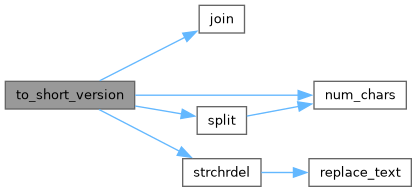
| char * to_short_version | ( | const char * | s | ) |
Reduce a version string to the major[minor] format used by Python
| s | python version string |
 1.17.0